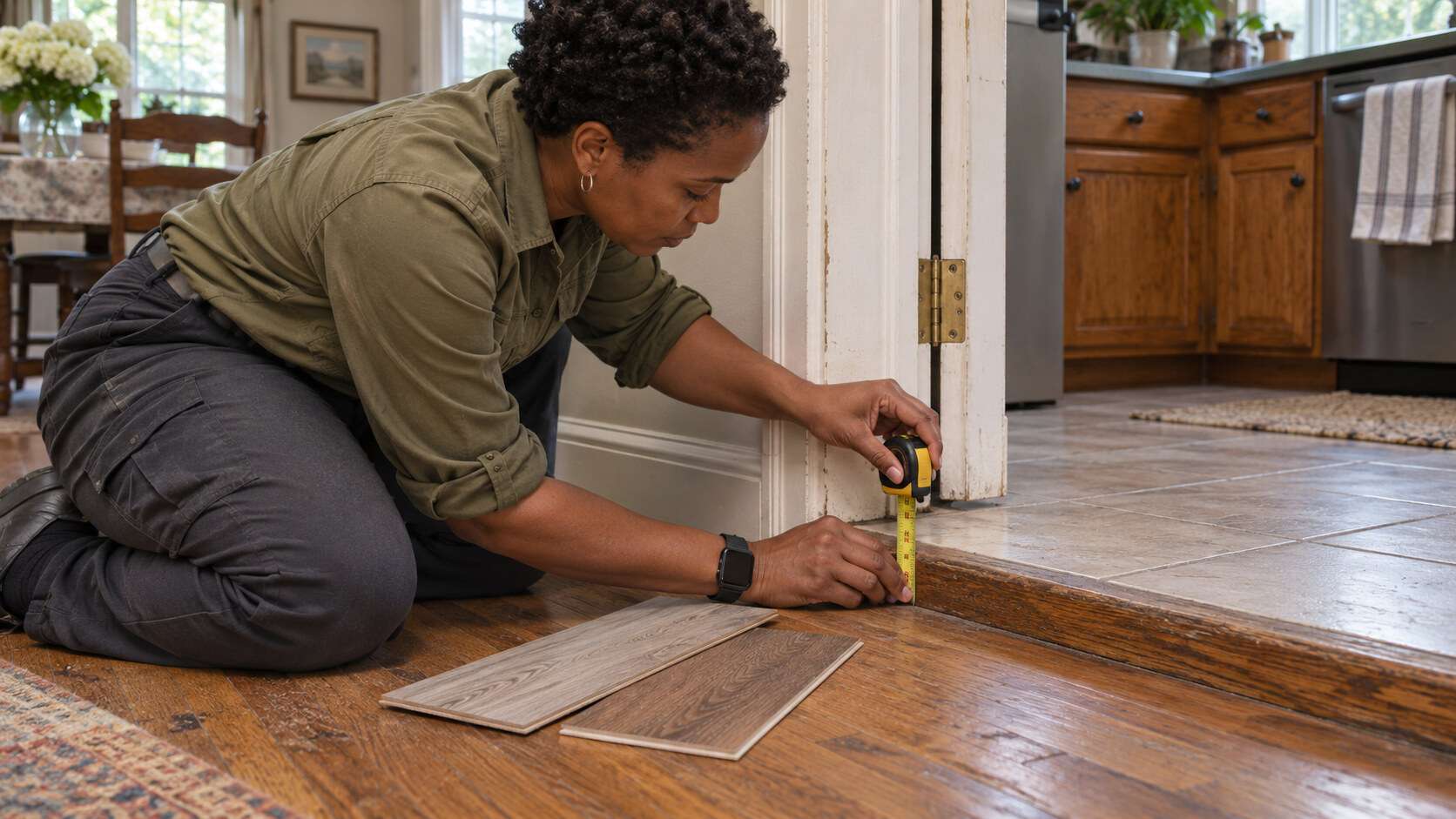
A homeowner finds a light oak-look plank she likes and asks what it would cost to put it in her finished basement. She has already made a design decision. Your crew still needs to know what is under the carpet, whether there has been moisture, and how the new floor would meet the stairs and adjoining rooms.
A flooring contractor website should help customers make two separate decisions. First, which material or service fits the room and the way they use it? Second, what does the installer need to see before confirming the scope, price, and schedule? Give customers a way to explore options and a clear path to request an estimate, even when they have yet to pick a product.
If you’re reviewing your own website, use the Flooring Estimate Planning Worksheet to check what customers can tell you before a site measure.
Key Takeaways
- A flooring contractor website should guide customers in choosing materials and understanding the installation process.
- Offer different next steps for shoppers and estimate-ready customers, with clear paths to request estimates.
- Service pages must provide key information about each installation type and expectations regarding site conditions.
- Make the project gallery helpful by organizing completed work and providing clear captions for comparisons.
- Include a user-friendly estimate request form that accounts for uncertainties and explain the post-request process clearly.
Give shoppers and estimate-ready customers different next steps
A showroom that supplies and installs flooring can use Compare Flooring Options or Plan a Showroom Visit for customers choosing a material. Link to the materials you actually carry, explain how customers can view samples, and tell them what to bring, such as room photos and rough dimensions. A customer who wants to compare carpet and vinyl plank in a family room should be able to take a next step without having to choose a brand on a form.
An installation-only contractor can use Request an Installation Estimate as the main action. Explain whether you accept customer-supplied products and what you need before agreeing to install one. You may want a product name or spec sheet once a product is chosen. Also say who orders the material, checks the quantities, and handles shortages or returns. A refinishing specialist should give customers with existing wood a separate path, such as Ask About Refinishing My Floors.
Set these expectations on the homepage and repeat the relevant action on each service page. A buyer who lands directly on a tile page from a local search should be able to tell where you work, what you install, and how to ask about the job without going back through the homepage. Use the same logic when you describe the towns and neighborhoods you actually serve.
Build service pages around the room and the work
A material page earns its place when it answers a question customers ask before they contact you. For every service you offer, explain where customers commonly use it, what you need to verify on site, what the estimate may include, and what to do next. The guide to writing a service page gives you a structure you can use across these pages.
- Hardwood installation. Explain which solid or engineered products you work with and how customers can see actual samples. Tell them why the crew asks about the room level, subfloor, and site conditions. The National Wood Flooring Association installation guidelines cover jobsite and substrate evaluation for wood flooring. On your page, explain what your team checks and when.
- Luxury vinyl plank and laminate. Clarify which products you supply or accept and whether your team handles tear-out, prep, and doorway transitions. If a customer wants new flooring in a lower level, explain what you need to review before confirming that a specific product fits the room.
- Tile. Show the tile projects you take on and where your scope ends. A customer comparing an entryway and a bathroom should understand which areas you handle and how layout, transitions, and preparation figure into the estimate.
- Carpet. Explain how the customer can compare carpet and pad, and whether you handle stairs, furniture, removal, and disposal. If your carpet service is limited to certain rooms or job sizes, put that near the estimate link.
- Hardwood refinishing. Show what you can evaluate from pictures and what you need to see in person. Explain whether patching, stain samples, or trim work can be included, and who will confirm when the household can use the rooms again.
If commercial work is a substantial part of your business, give it a separate inquiry path. A shop replacing flooring while it stays open needs to discuss work hours and phasing. A builder bidding from plans needs to share drawings, scope, and a bid deadline. Neither has the same starting point as a homeowner browsing samples.
Make the gallery useful for comparing projects
Organize completed work by a decision a visitor is trying to make. A page about refinishing can show how existing oak looked before and after a change in finish. A vinyl plank gallery can show how a lower-level installation meets a stair landing. Include a wide photo for context and a detail where it helps explain a doorway, stair edge, or transition.
Give each project a short caption that identifies the room, the material, and one part of the job that matters. A caption pattern might read “Occupied first floor, engineered oak, with a transition to the existing kitchen tile.” Use a caption like this only when it accurately describes the project. Keep the same viewpoint and similar lighting where practical for before-and-after photos, and publish only images you have permission to use.
Place one or two relevant projects on the service page itself. A visitor who came to learn about carpeted stairs should see a stair example and a clear estimate link right there. If you mention a credential or workmanship warranty near the example, name the issuing organization or explain the actual coverage so customers can tell what it applies to.
Use a short estimate request with room for uncertainty
Start with enough information to route the request. An office coordinator should be able to tell where the work is, what the customer is considering, and what to ask next. Use the following as a room, subfloor, and material estimate template when you review your form.
Room, subfloor, and material estimate template
- Contact and location. Ask for a name, a reliable way to reach the customer, and the project ZIP code. Collect the full address when your process requires it, such as arranging a site visit.
- Rooms and size. Ask which rooms, stairs, or hallways are involved. Accept rough dimensions or square footage if the customer has them. Let your crew confirm quantities at the measure.
- Current floor and known subfloor. Ask what is visible now and what the customer already knows about the surface below it. Include Not sure and leave investigation to the appropriate professional.
- Material and scope. Offer options for help choosing, a product already selected, or refinishing an existing floor. Ask whether the request includes removal, trim, or moving large furniture, with space for uncertainty.
- Timing, access, and photos. Ask whether the date is flexible or tied to a move or opening. Accept optional room and transition photos. Explain what photos can help you review and which conditions require a site visit.
Consider a customer who wants vinyl plank in two basement rooms before a move. They know there is carpet, but have no idea what is below it. Let them choose Not sure, describe any known moisture history, and submit the request. The confirmation can say your team will review the details and contact them about a site measure. That gives them a next step and leaves the installation decision with the crew.
Check what your estimate form captures
Use the Flooring Estimate Planning Worksheet to check what your form collects about the rooms, existing floor, and material choices before your crew schedules a site measure.
Get Your Free Flooring Estimate Planning Worksheet
Explain what happens after the request
Show the steps in the order your team actually follows. A common sequence is inquiry, site measure, written estimate, product confirmation, scheduling, and preparation. If customers choose a product at your showroom before you measure, say so. Explain the difference between submitting a request and securing an installation date. Use a response window only when your team can meet it.
Put the practical preparation questions where existing customers can find them again. Cover furniture and appliances, parking and entry, pets, and which rooms will be unavailable. Explain how you handle a change in scope if an issue is found after removal. Give customers a way to ask about a scheduled job or get care instructions after the walkthrough. Tie any product-specific instructions to the installed product and finish.
Test both customer paths on a phone
Start on a material page and see if you can find a relevant project and a way to ask for help choosing. Then act as a buyer who already has a product in mind. Submit a test request with a ZIP code, two rooms, an unknown subfloor, and no photo. Verify that the request reaches the person who handles estimates and that the customer sees what happens next. The contact form testing guide walks through both sides of that check.
If customers can get through both paths, your site is doing useful work before the first call. They can see what you install, give your team enough to start, and understand what still needs to be checked in person.
Want a second set of eyes on your flooring pages and estimate process?